The Business Case for Handwriting in High-Performance Teams
Why handwriting powers better thinking in the modern workplace, and how digital tools like Notability make it scalable.
.png)
In a workplace dominated by keyboards, automation, and AI-driven workflows, it’s easy to assume handwriting is fading into irrelevance. But research across neuroscience, cognitive psychology, and workplace productivity tells a different story: the act of writing by hand meaningfully improves how we think, learn, and make decisions.
And for many of Notability’s enterprise customers, including analysts, interior designers, and NFL coaches, handwriting isn’t nostalgic. It’s strategic.
Today we explore why handwriting continues to matter in high-performance organizations, how leading teams are applying pen-first workflows in a digital world, and what happens when the timeless benefits of handwriting meet modern, scalable tools.
The Neuroscience Behind Writing for Work
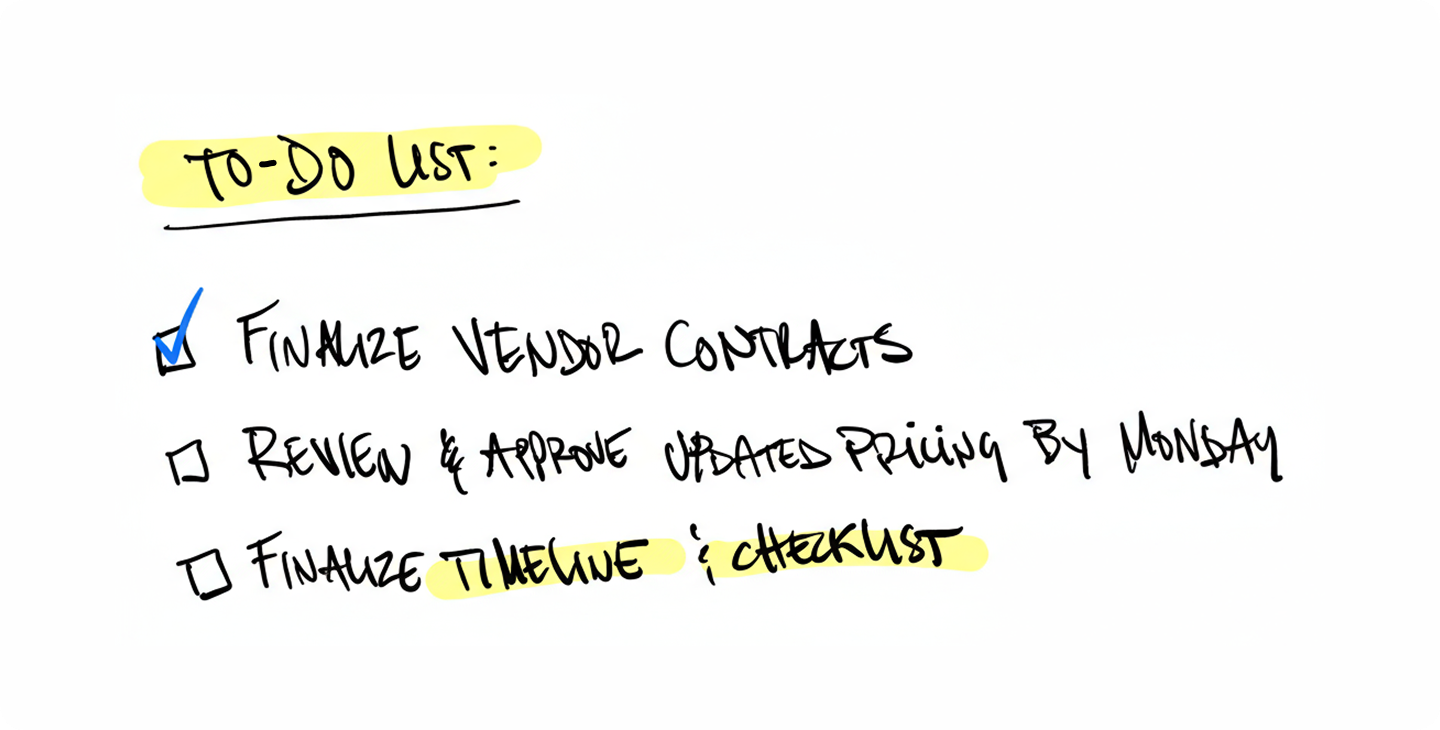
Neuroscience and learning research have spent decades examining the difference between typing and handwriting. Across studies, one conclusion keeps emerging: writing by hand activates more of the brain than typing. Researchers Ihara, Aya S et al. in Volume 15 of Frontiers in Human Neuroscience conducted a group study to specifically analyze the impact of handwriting on paper and handwriting with a digital pen on a tablet over typing on a keyboard. They found that the study participants had an increase in the ability to learn compared with keyboard typing once the individuals became accustomed to it.
When people form letters or draw shapes, they engage motor pathways, visual systems, and language networks simultaneously. That multisensory activation strengthens comprehension and memory in ways keyboard-based transcription can’t match. Because handwriting is slower, the brain is forced to make decisions: What matters? What connects to what? How should this idea be represented?
It’s a cognitive workout, and the results translate directly to the workplace:
- Clearer understanding during training and onboarding
- Better recall of meetings and strategy sessions
- Faster creative problem-solving
- More effective communication and feedback loops
- Higher engagement and retention across teams
The Digital Turning Point
.png)
Handwriting alone isn’t enough for the pace of modern business. Digital tools make handwriting more useful, searchable, and shareable than ever. Pen-first workflows give teams the cognitive advantage, but digital workflows give organizations the operational advantage. That’s why Notability’s enterprise platform pairs the best of both worlds: natural handwriting tools with digital structure and shareability.
Teams who utilize Notability gain:
- High-comprehension capture at the moment of learning or decision through recorded audio tied to handwritten or typed notes
- Handwriting searchability and structure among notes and across teams
- Easy review and collaboration through imported PDFs, annotated documents, and shared libraries
- Consistent processes using reusable templates across inspections, coaching, planning, and client engagements
- Better auditability and documentation for compliance, QA, and onboarding
This hybrid approach of writing by hand and managing digitally is quickly becoming the new standard for high-performing teams.
Designing a Handwriting-First Workflow For Your Team
.png)
As businesses modernize their documentation and collaboration practices, a few guidelines can help teams get the most from handwriting:
- Use handwriting where thinking matters most: In brainstorming sessions, strategy reviews, design jams, trainings, and inspections.
- Organize digitally: Tag notes, convert handwriting to text if needed, sync to shared libraries and cloud storage.
- Standardize repeatable workflows: Draft inspection templates, onboarding documents, coaching play sheets, design consultation pages, and client review checklists. Consistent page formats improve reporting quality and make workflows scalable.
- Share annotated outputs, not static screenshots: A hand-marked PDF or sketch may tell a clearer story than paragraphs of typed feedback. Clarity rises dramatically when teams can see exactly what someone circled, drew, or emphasized.
Why Writing Still Wins
Handwriting is not outdated, it’s underutilized. As businesses push for clarity, speed, and smarter decisions, the cognitive advantages of handwriting offer a meaningful edge. And when supported by modern digital tools that make handwritten work scalable across teams, handwriting becomes a true strategic asset.
At Notability, we’ve been seeing this shift firsthand across industries. Whether it’s a pilot annotating a flight briefing, a designer sketching a storage system, or an analyst reviewing a client deck, teams are rediscovering a simple truth: writing by hand helps people think better.
Digital tools shouldn’t replace this advantage, they should amplify it. That’s exactly what we’re building toward with Notability for Business. We’re committed to bringing the science of handwriting and the power of digital collaboration together, so teams can work the way the brain actually works best.
Reference
Ihara, A. S., Nakajima, K., Kake, A., Ishimaru, K., Osugi, K., & Naruse, Y. (2021). Advantage of Handwriting Over Typing on Learning Words: Evidence From an N400 Event-Related Potential Index. Frontiers in human neuroscience, 15, 679191. https://doi.org/10.3389/fnhum.2021.679191

.png)